3 Multiplication Table
1. What Is the 3 Multiplication Table?
The 3 multiplication table (or 3 times table) is a fundamental math tool that lists the products of multiplying the number 3 by whole numbers from 1 to 12 (and beyond). It’s typically taught in 2nd grade, right after students master the 1s, 2s, 5s, and 10s tables, as it introduces gentle complexity while still having recognizable patterns. The core sequence of the 3 times table (1–12) is:3×1=3, 3×2=6, 3×3=9, 3×4=12, 3×5=15, 3×6=18, 3×7=21, 3×8=24, 3×9=27, 3×10=30, 3×11=33, 3×12=36
A key characteristic of the 3 multiplication table is the digit-sum rule—the sum of the digits in every product is a multiple of 3. For example, 3×7=21 (2 + 1 = 3) and 3×8=24 (2 + 4 = 6). This rule is a quick way to verify answers and builds pattern-recognition skills that are critical for advanced math like divisibility tests.
Key Characteristics of the 3 Multiplication Table
- Digit-sum divisibility rule: The sum of the digits of any multiple of 3 is also divisible by 3 (a handy check for errors).
- Incremental sequence: Each product increases by 3, making skip counting a reliable practice strategy.
- Mixed even-odd products: Products alternate between odd and even (3 = odd, 6 = even, 9 = odd, etc.)—another quick verification trick.
- Commutative property compatibility: 3×n=n×3 (e.g., 3×6=18 is the same as 6×3=18).
2. Free Printable 3 Multiplication Table Resources
We offer a range of high-quality, customizable printable resources for the 3 multiplication table—all 100% free, with no sign-up or subscription required. These tools cater to different learning styles, from visual learners to kinesthetic practitioners.
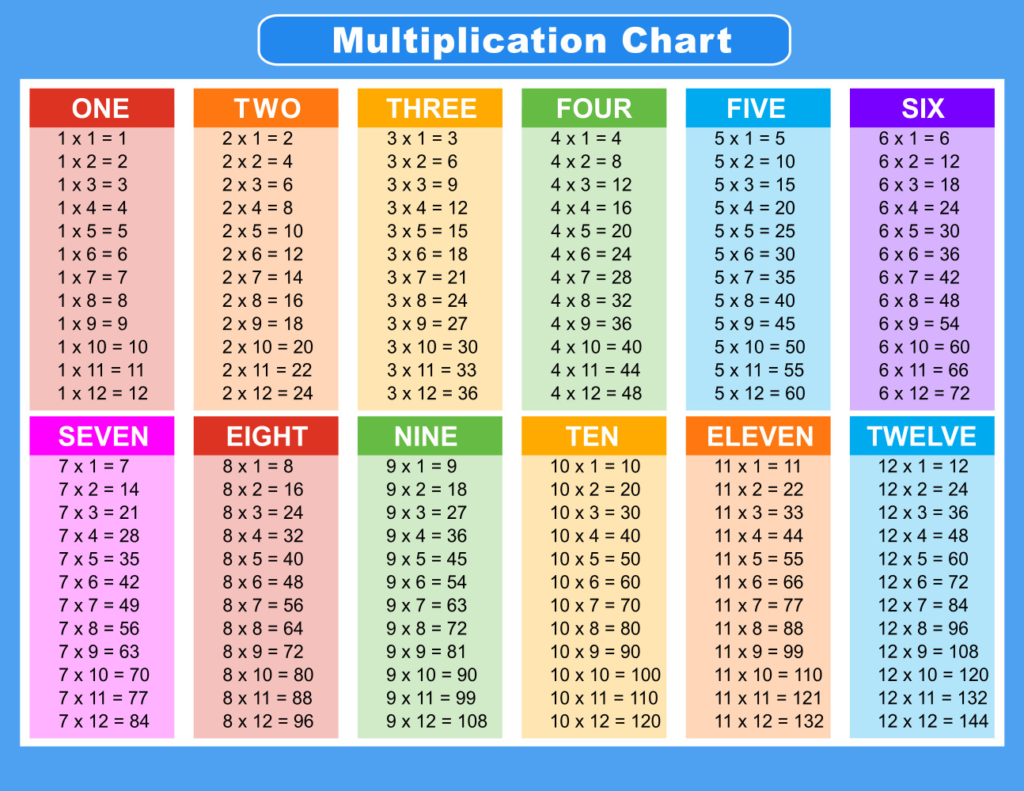
2.1 Filled 3 Multiplication Table Printable (1–12)
- Best for: Beginners, students who need a quick reference tool, or learners struggling with fact recall.
- What’s included: A clear, organized grid listing all 3×1 to 3×12 facts, with bold labels for rows and columns. The grid highlights the digit-sum rule for each product to reinforce pattern recognition.
- Use case: Hang it in the classroom math center, tape it to a homework folder, or keep it on the fridge for at-home quick checks.
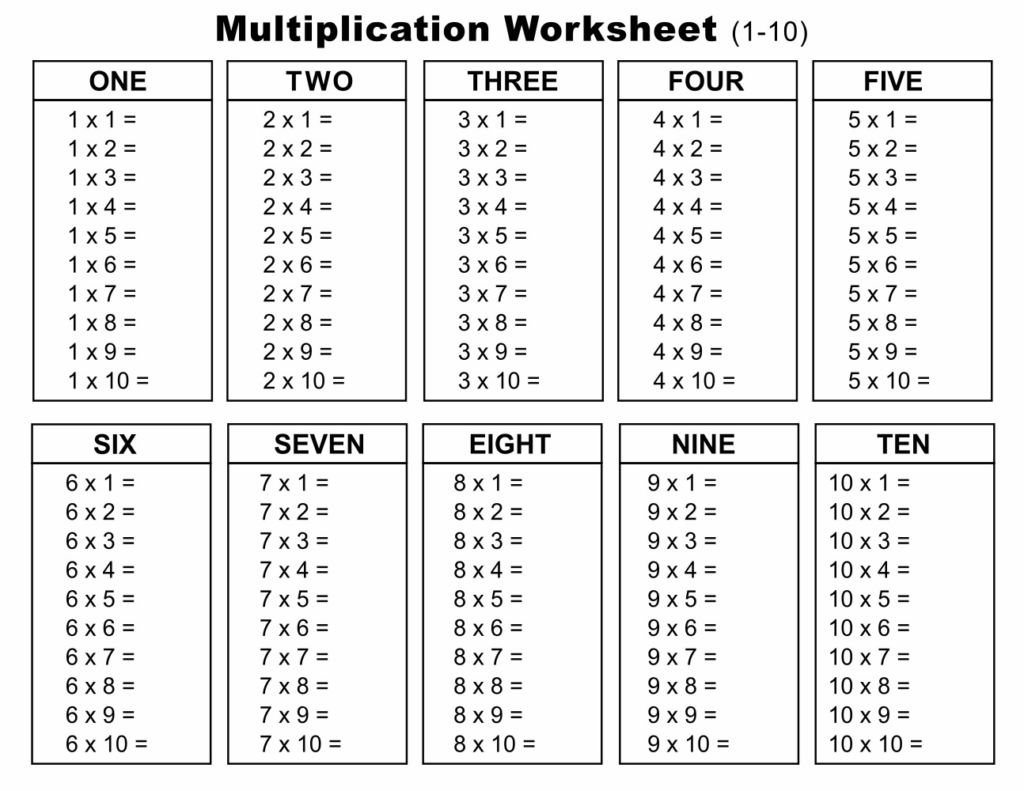
2.2 Blank 3 Multiplication Table Worksheet
- Best for: Active memorization, timed drills, and progress tracking.
- What’s included: An empty template with “3 ×” pre-labeled for each row, plus a bonus section for practicing fact families (e.g., 3×5=15; 15÷3=5).
- Use case: Assign as 3–5 minute daily warm-ups, formative assessments, or homework to build fluency.
2.3 Color-Coded 3 Multiplication Table
- Best for: Visual learners who benefit from pattern highlighting.
- What’s included: A grid where products are color-coded by their digit-sum (sum = 3: blue; sum = 6: green; sum = 9: yellow). Tricky facts (e.g., 3×7=21, 3×11=33) are highlighted in orange for targeted practice.
- Use case: Teach students to use the digit-sum rule to check answers and memorize facts faster.
2.4 Large-Print 3 Multiplication Table Poster
- Best for: Students with visual impairments, classroom wall displays, or young learners (1st–3rd grade) who need oversized text.
- What’s included: Bold, large-format numbers with ample spacing between facts, making it readable from across the room. The poster also includes a skip-counting jingle for auditory learners.
- Use case: Print as a poster for a primary math classroom or provide to students who require accessible learning materials.
2.5 Themed 3 Multiplication Table Worksheets
- Best for: Engaging young learners (1st–3rd grade) who need fun incentives to practice.
- What’s included: 3 times table activities with playful themes (dinosaurs, space, unicorns, sports) including fill-in-the-blank, matching, and coloring tasks. Many worksheets feature real-world scenarios (e.g., 3 cookies per plate) to link math to daily life.
- Use case: Turn practice into a reward—let students color the themed worksheet after mastering all 3s facts from 1–10.
3. Easy Tricks to Master the 3 Multiplication Table
The 3 multiplication table is intuitive to learn with these targeted tricks that leverage pattern recognition and existing math knowledge:
Trick 1: The Digit-Sum Check Rule (Verify Answers Fast!)
This is the most unique trick for the 3s table. For any product of 3, add the digits together—if the sum is not divisible by 3, the answer is wrong:
- Example: 3×9=27 → 2 + 7 = 9 (divisible by 3) → Correct!
- Example: A student writes 3×6=20 → 2 + 0 = 2 (not divisible by 3) → Wrong! The correct answer is 18 (1 + 8 = 9).
Trick 2: Skip Count with a Catchy Jingle (For Auditory Learners)
Skip counting by 3 aloud with a steady beat helps cement the sequence in memory. Use this fun jingle to make practice enjoyable:“3, 6, 9—let’s have a good time! 12, 15, 18—we’re mastering 3s, that’s great! 21, 24, 27—math is fun, let’s keep goin’! 30, 33, 36—we’ve got this, let’s mix it up!”
Trick 3: Use the Commutative Property
Remind learners that multiplication is commutative—3×n=n×3. If they forget 3×8, they can recall 8×3=24 (which they might practice more often) to get the answer.
Trick 4: Link to Repeated Addition (For Kinesthetic Learners)
For students who struggle with memorization, connect 3s facts to repeated addition—this builds conceptual understanding:
- Example: 3×4=3+3+3+3=12
- Example: 3×7=3+3+3+3+3+3+3=21
Trick 5: Real-World Group Connections
Make the 3s table tangible by linking it to everyday groups of 3:
- 3 legs on a stool → 3×5=15 legs on 5 stools
- 3 primary colors → 3×4=12 colors in 4 sets of primaries
- 3 meals a day → 3×7=21 meals in a week
This trick turns abstract math into practical knowledge.
4. Fun Activities to Practice the 3 Multiplication Table
Make 3s practice engaging with these low-prep, interactive activities that work for classrooms, homeschool settings, and at-home learning:
- 3s Bingo: Create bingo cards with 3 multiplication table products (3–36). Call out facts (e.g., “3 times 7”) or real-world prompts (e.g., “How many legs on 6 stools?”). Students mark the corresponding number—first to get bingo wins a small prize (stickers, a pencil).
- Blank Table Relay Race: Divide students into teams. Each student runs to a blank 3 times table, fills in one fact, and tags the next team member. The first team to complete the table correctly wins (add a bonus point for teams that use the digit-sum rule to check answers).
- 3s Digit-Sum Scavenger Hunt: Hide cards with 3s products around the room. Each card has a product (e.g., 21) and a clue (e.g., “My digit sum is 3”). Students find the cards and match them to the corresponding multiplication fact (e.g., 3×7=21).
- Peer Tutoring Pairs (Buddy Practice): Pair advanced students with beginners. The advanced student calls out 3s facts, and the beginner answers using a printable table for hints if needed. Switch roles to reinforce learning for both.
- 3s Art Project (Pattern Poster): Have students create a poster of the 3 multiplication table, decorating each fact with a drawing that represents the digit-sum rule (e.g., 3×6=18 → draw 9 stars to represent the digit sum of 9). Display posters in the classroom to celebrate progress.
- 3s Timed Challenge (Speed Drill): Set a timer for 1 minute and have students write as many 3s facts as they can. Track their progress over time—most students can master all 1–12 facts in under a minute with consistent practice!
5. Benefits of Mastering the 3 Multiplication Table
Fluency with the 3 times table is a critical milestone for young learners, with these key advantages:
- Builds pattern-recognition skills: The digit-sum rule teaches students to look for math patterns, a skill that transfers to division, fractions, and algebra.
- Simplifies multi-digit multiplication: Knowing 3s facts makes solving problems like 13×4 or 23×5 faster and less frustrating.
- Enhances division fluency: Recognizing 3s facts helps students solve division problems (e.g., 27÷3=9) by connecting multiplication and division as inverse operations.
- Prepares for divisibility tests: The digit-sum rule is the foundation of the divisibility test for 3—a key skill for middle school math.
- Supports real-world problem-solving: 3s facts are used in everyday scenarios (e.g., 3 friends sharing snacks, 3 books per shelf) to calculate totals and make decisions.
- Aligns with early math standards: Mastering the 3 multiplication table is required for most 2nd–3rd grade math curricula (Common Core, Montessori, etc.).
6. Frequently Asked Questions (FAQ) About the 3 Multiplication Table
Q1: What is the full 3 multiplication table from 1 to 12?
A1: The full 3 times table from 1 to 12 is: 3×1=3, 3×2=6, 3×3=9, 3×4=12, 3×5=15, 3×6=18, 3×7=21, 3×8=24, 3×9=27, 3×10=30, 3×11=33, 3×12=36.
Q2: Are your 3 multiplication table printables really free?
A2: Yes! All our 3 times table resources (filled charts, blank worksheets, color-coded versions, themed activities) are 100% free to download and print. There are no hidden fees, subscriptions, or sign-up requirements—print as many copies as you need for personal or classroom use.
Q3: What file format are the 3 multiplication table printables in?
A3: All resources are available as high-resolution PDFs. PDFs ensure the content looks crisp and clear no matter what size you print it, and they’re compatible with most devices, printers, and learning management systems (LMS) like Google Classroom.
Q4: At what grade do students learn the 3 multiplication table?
A4: Most students learn the 3 times table in 2nd grade (around 7–8 years old), right after mastering the 1s, 2s, 5s, and 10s tables. Some advanced 1st graders may start learning 3s through skip counting practice.
Q5: What is the easiest trick to remember the 3 multiplication table?
A5: The easiest trick is the digit-sum check rule—the sum of the digits in any multiple of 3 is also divisible by 3. This rule lets you verify answers in seconds and reinforces pattern recognition.
Q6: Can I customize the 3 multiplication table printables?
A6: Absolutely! Our blank worksheets and editable PDF templates let you add colors, highlight specific facts, insert custom themes (e.g., superheroes, animals), or extend the table beyond 12 for advanced practice. You can also resize the content for posters or pocket-sized references.
Q7: How do I use the 3 multiplication table to teach division?
A7: Multiplication and division are inverse operations. For example, to solve 24÷3, find 24 on the 3 times table—its corresponding factor is 8 (since 3×8=24), so the answer is 8. This helps students connect multiplication facts to division skills.
Q8: How often should students practice the 3 multiplication table?
A8: Short, consistent practice is key. For young learners, we recommend 3–5 minutes of daily practice (e.g., skip counting, blank worksheet drills, games) rather than occasional long sessions. Most students master the 3s in 1–2 weeks with this routine.
Q9: Are there black-and-white versions of the 3 multiplication table printables?
A9: Yes! We offer black-and-white versions of all our 3 times table resources to save printer ink. Students can also color the black-and-white worksheets themselves, adding a fun, creative element to practice.
Q10: Can these 3 multiplication table resources be used for homeschooling?
A10: Yes! Our printables align with most homeschool math curricula (Common Core, Montessori, Classical Education, etc.). Use filled charts for reference, blank worksheets for assessment, and themed activities to keep young learners motivated.
Q11: How do I laminate a 3 multiplication table for reusable practice?
A11: First, print the table on cardstock for sturdiness. Then, use a home laminator to seal it—this allows students to use dry-erase markers to fill in blank tables and erase repeatedly. If you don’t have a laminator, visit a local office supply store (e.g., Staples, Office Depot) for professional lamination.
Q12: Can the 3 multiplication table resources be used for remote learning?
A12: Yes! You can email the PDF printables to students for at-home printing, or share digital versions on LMS platforms like Google Classroom, Canvas, or Schoology. Students can also fill in blank worksheets digitally using annotation tools (e.g., Adobe Acrobat, Notability).
Q13: Is there a difference between the 3 multiplication table and the 3 times table?
A13: No—these terms are used interchangeably. Both refer to the list of products obtained by multiplying 3 by whole numbers. Our resources cater to both terminology preferences.
Q14: Are there 3 multiplication table resources for students with learning disabilities?
A14: Yes! Our large-print versions are ideal for students with visual impairments, and our color-coded tables help learners with dyslexia or dyscalculia recognize patterns more easily. Blank worksheets with large spacing also reduce visual clutter for neurodiverse learners.
Q15: How do I track a student’s progress with the 3 multiplication table?
A15: Use these methods: (1) Weekly timed blank worksheet drills (record completion time and number of errors); (2) A checklist of mastered facts (e.g., “3×7=21 – Mastered,” “3×12=36 – In Progress”); (3) Oral quizzes (call out facts and track correct responses); (4) Game-based assessments (Bingo, scavenger hunts) to make tracking fun.
Q16: Can the 3 multiplication table be extended beyond 12?
A16: Yes! While our standard printables go up to 3×12=36, we offer blank customizable templates that can be extended to 3×20 or beyond. This is great for advanced elementary students or kids who want to challenge themselves.
Q17: Are there themed 3 multiplication tables for different student interests?
A17: Yes! We offer themed 3 times tables for popular student interests, including dinosaurs, space, unicorns, soccer, farm animals, and superheroes. Themed resources make practice more engaging for reluctant learners.
Q18: How do I teach the commutative property with the 3 multiplication table?
A18: The commutative property states that a×b=b×a. Use the 3 times table to show students that 3×6=18 and 6×3=18 are the same. Have students match 3s facts with their reverse counterparts (e.g., 3×8 and 8×3) to reinforce the concept.
Q19: Can I print multiple 3 multiplication tables on one page to save paper?
A19: Yes! Most PDF viewers (e.g., Chrome PDF Viewer, Adobe Acrobat) let you adjust the “pages per sheet” setting when printing. You can print 2 or 4 small 3 times tables on one page for student handouts or pocket-sized references.
Q20: Is the 3 multiplication table aligned with Common Core standards?
A20: Yes! The Common Core State Standards for 2nd grade require students to “fluently multiply and divide within 100,” which includes mastering the 3 multiplication table (up to 3×12=36). Our resources are fully aligned with these standards.
Q21: Can I share the 3 multiplication table printables with other teachers or parents?
A21: Absolutely! Non-commercial sharing is encouraged. You can share the download link with colleagues, parent groups, homeschool co-ops, or PTA members to support more learners.
Q22: What’s the best paper type for printing the 3 multiplication table?
A22: For everyday use (homework, handouts), standard printer paper (8.5×11 in / A4) works fine. For durability (especially if laminating), use cardstock. For classroom posters, use thick poster paper or 11×17 in cardstock for better visibility.
Q23: How do I prevent the 3 multiplication table from tearing or fading?
A23: Laminating is the best way to protect it from tears, smudges, and fading. If you don’t have a laminator, use a clear plastic binder sleeve to cover the printable. Avoid exposing printed resources to direct sunlight for extended periods to prevent fading.
Q24: Can the 3 multiplication table be used for summer math practice?
A24: Yes! Practicing the 3 times table during summer break helps prevent “summer slide”—the loss of math skills when students are out of school. Assign 1–2 quick activities per week (e.g., fill in a blank worksheet, play 3s Bingo) to keep skills sharp.
Q25: Are there 3 multiplication table worksheets with word problems?
A25: Yes! We offer printable worksheets that pair 3s facts with real-world word problems (e.g., “A gardener plants 3 flowers per pot. How many flowers are in 7 pots?”). These help students apply their multiplication skills to practical scenarios.
Q26: How do I help a student who struggles with the 3 multiplication table?
A26: Try these strategies: (1) Start with skip counting by 3 to build familiarity; (2) Use the digit-sum rule to verify answers and build confidence; (3) Incorporate games and real-world examples to reduce stress; (4) Celebrate small wins (e.g., mastering 1–5 facts) to keep motivation high.
Q27: Are the 3 multiplication table printables left-handed friendly?
A27: Yes! Our printables are designed for left-handed learners—rows and columns are labeled on both the top/left and bottom/right to prevent smudging when writing or reading. Large-print versions also have extra spacing to accommodate left-handed writing styles.
Q28: Are there digital interactive resources for the 3 multiplication table?
A28: Yes! We offer interactive digital resources (compatible with tablets, laptops, and desktops) including drag-and-drop matching games, fill-in-the-blank quizzes, and interactive charts that highlight the digit-sum rule in real time. These are great for students who prefer screen-based learning.
Q29: What’s the hardest fact in the 3 multiplication table for most students?
A29: Most students find 3×7=21, 3×8=24, and 3×11=33 slightly trickier than smaller facts, since 7, 8, and 11 are larger numbers. Extra practice with these facts (and linking them to the digit-sum rule) can help students master them quickly.
Q30: Can the 3 multiplication table resources be used for ESL students?
A30: Yes! Our 3 times table printables use numbers and simple labels (with minimal text), making them accessible for ESL students. You can also add bilingual labels (e.g., “3×4=12” / “3 por 4=12”) to support language learners.
Q31: Are there 3 multiplication table flashcards to pair with the printables?
A31: Yes! We offer printable 3s fact flashcards (with facts on one side and answers on the other) to complement our tables. These are great for quick oral drills, memory games, or on-the-go practice (e.g., in the car or waiting room).
Q32: How do I make 3 multiplication table practice fun for reluctant learners?
A32: Try these ideas: (1) Let students choose their favorite themed worksheet; (2) Turn practice into a game (relays, Bingo, scavenger hunts); (3) Offer small rewards (stickers, extra playtime) for progress; (4) Connect facts to their interests (e.g., “3 video game levels per world—how many levels for 5 worlds?”); (5) Use digital games and apps.
Q33: Can I print a pocket-sized 3 multiplication table for on-the-go practice?
A33: Yes! Resize the PDF to a small size (e.g., 4×6 in) when printing, and use cardstock for durability. Laminate the small table so students can keep it in their backpack, pencil case, or notebook for quick reference or practice anytime.
Q34: How do I use manipulatives to teach the 3 multiplication table?
A34: Use everyday manipulatives (counters, blocks, candy) to show groups of 3. For example, to teach 3×5, have students make 5 groups of 3 counters, then count the total to get 15. This hands-on approach helps kinesthetic learners understand multiplication as repeated addition.
Q35: Are there seasonal 3 multiplication table printables?
A35: Yes! We offer seasonal 3 times tables for holidays like Christmas, Halloween, Thanksgiving, Easter, back-to-school, and summer. These seasonal resources make practice feel festive and engaging throughout the year.
Q36: Can the 3 multiplication table be used for assessments or quizzes?
A36: Yes! Our blank 3 multiplication table worksheets are ideal for timed quizzes (e.g., “Can you fill in the 3s table in 1 minute?”) or formative assessments. You can also use oral quizzes (calling out facts) to test fluency without paper.
Q37: How long does it take for a student to master the 3 multiplication table?
A37: It depends on the student’s age and prior math knowledge. Most young learners master the 3 times table (1–12) in 1–2 weeks with 3–5 minutes of daily practice. Advanced students may master it in even less time.
Q38: Is 0 a multiple of 3?
A38: Yes! By mathematical definition, 0 is a multiple of every whole number (including 3) because 3×0=0. While elementary students typically focus on positive multiples (1–12), this is a useful fact to introduce for advanced learning.
Q39: Can the 3 multiplication table help with fraction simplification?
A39: Yes! Knowing 3s facts helps students recognize common factors when simplifying fractions. For example, to simplify 15/21, students can use 3×5=15 and 3×7=21 to divide both the numerator and denominator by 3, resulting in 5/7.
Q40: Are there group activities for the 3 multiplication table in the classroom?
A40: Yes! Try these group activities: (1) Team relay races to fill blank 3s tables; (2) Collaborative poster projects where each student contributes one 3s fact; (3) Group skip-counting circles (students take turns saying the next number in the 3s sequence); (4) Peer tutoring pairs where advanced students help peers master tricky facts.
Q41: What is the largest 3-digit multiple of 3?
A41: The largest 3-digit number is 999. Since 9 + 9 + 9 = 27 (divisible by 3), 999 is the largest 3-digit multiple of 3 (3×333=999).
Q42: Can the 3 multiplication table be used to teach decimal multiplication?
A42: Yes! For middle school students, the 3 times table can be extended to decimals (e.g., 3×0.5=1.5, 3×1.2=3.6). This helps learners connect whole-number multiplication to decimal concepts.
Q43: Are there 3 multiplication table resources for advanced learners?
A43: Yes! We offer advanced worksheets with multi-step problems (e.g., “If 3×x=27, what is x+15?”) and word problems that require critical thinking (e.g., “A store sells 3 shirts per hour. How many shirts do they sell in 12 hours and 30 minutes?”).
Q44: How do I use the 3 multiplication table to teach skip counting?
A44: Skip counting by 3 is directly tied to the 3 times table (3, 6, 9, 12…). Use the filled 3 multiplication table to guide students in skip counting aloud, then have them practice writing the sequence independently. Manipulatives like blocks can also help visualize the skip counting process.
Q45: Can I use the 3 multiplication table for math competitions?
A45: Yes! Fluency with the 3 times table is essential for speed-based math competitions (e.g., Math Olympiad, Kangaroo Math) for young learners. Our timed blank worksheets are perfect for training students to recall facts quickly under pressure.
Q46: How does the 3 multiplication table help with learning other tables?
A46: The 3 multiplication table teaches the digit-sum pattern, which is a precursor to the divisibility rules for 9 and 6. It also helps with composite tables like 13s (13×4=(10×4)+(3×4)=40+12=52).
Q47: Can the 3 multiplication table be used to teach multiplication as repeated addition?
A47: Yes! For example, 3×3=3+3+3=9. Use manipulatives to show repeated addition, then connect it to the multiplication fact to build conceptual understanding.
Q48: Are there 3 multiplication table worksheets for pre-K students?
A48: Yes! We offer simplified worksheets for pre-K students that focus on skip counting by 3 and identifying groups of 3 objects. These worksheets use large numbers and pictures to make learning fun for young kids.
Q49: How do I teach the 3 multiplication table to kinesthetic learners?
A49: Kinesthetic learners benefit from movement-based practice. Try these ideas: (1) Jump rope while skip counting by 3; (2) Clap 3 times for each fact (e.g., clap 3 times and say “3×1=3”); (3) Walk around the room and touch 3 objects for each fact (e.g., touch 3 pencils and say “3×1=3”).
Q50: Can the 3 multiplication table be used to teach money skills?
A50: Yes! Connect the 3 times table to coins or bills (e.g., 3 nickels = 15 cents). For example:
- 4 sets of 3 nickels = 3×4=12 nickels = 60 cents
- 5 sets of 3 dollar bills = 3×5=15 dollars
This trick helps students learn both math and money skills at the same time.
7. Conclusion
The 3 multiplication table is a key building block of elementary math fluency, and our free resources make mastering it fun and easy. Whether you’re a teacher prepping classroom materials, a parent supporting homeschool practice, or a student looking to build foundational skills, our 3 times table charts, worksheets, and games will help you succeed.
Download your preferred 3 multiplication table resource today and take the first step toward math confidence—one fact at a time!